What solo play with an AI Dungeon Master looks like
A tabletop RPG splits the work in two: one person runs the world, everyone else plays a character. Solo play with an AI Dungeon Master keeps that split with only two seats at the table. You write what your hero does. The AI narrates what happens next, plays the people you meet and asks for a roll when the outcome is in doubt.
Fifth-edition-style games settle those moments the same way every time: roll a d20, add your bonuses, and compare the total with a Difficulty Class (DC) that was set before you threw. Beat it and the move works. Miss it and the story turns against you, which is often where the best scenes start.
There are two ways to set this up:
- A general chatbot that you set up yourself. Flexible and free-form, but you write the setup, track your own character sheet and remind it of the rules.
- An app built for it, such as Fablia. The character sheet, the dice, the quest log and the story's memory are part of the game, so you only have to play.
The steps below work either way. Where Fablia does a step for you, a short note says how.
Step by step
-
Pick your table
Decide where you will play: a chatbot you already use, or an app made for solo RPGs. If you want dice, a character sheet and saved campaigns without building them yourself, pick an app.
In Fablia Fablia is free on Google Play and runs on Android 7.0 or later. The iPhone and iPad version is coming soon.
-
Decide what kind of story you want
Before the first scene, pick a genre and a tone: a heroic quest, a horror crawl, a heist, court intrigue. Decide how much freedom you want too. Some players want a world with firm rules and real consequences; others want the story to follow them anywhere.
In Fablia Start with a ready-made story from the shelf: heroic, horror, heist, intrigue. With Fablia PRO you can build your own in Custom Game: write the world's laws, seed the people who matter and tell the Dungeon Master exactly how to run it. Either way, you choose how the DM plays: Story Mode keeps choices true to the world, Creative Mode gives you more freedom to shape it.
-
Make a character
Choose a people and a class, then give your hero one line of history and one thing they want. A goal and a flaw give the Dungeon Master something to push against, and that is what turns a string of scenes into a story.
In Fablia In a ready-made story the tale decides your hero's people and class; you name them and pick their skills. With PRO you build the hero from scratch: one of eight peoples (Human, Elf, Dwarf, Halfling, Orc, Tiefling, Dragonborn or Demon) or a custom race you describe, and one of twelve classes, from Fighter and Wizard to Paladin and Warlock. Hit dice, saving throws and spellcasting follow fifth-edition rules.
-
Play the first scene
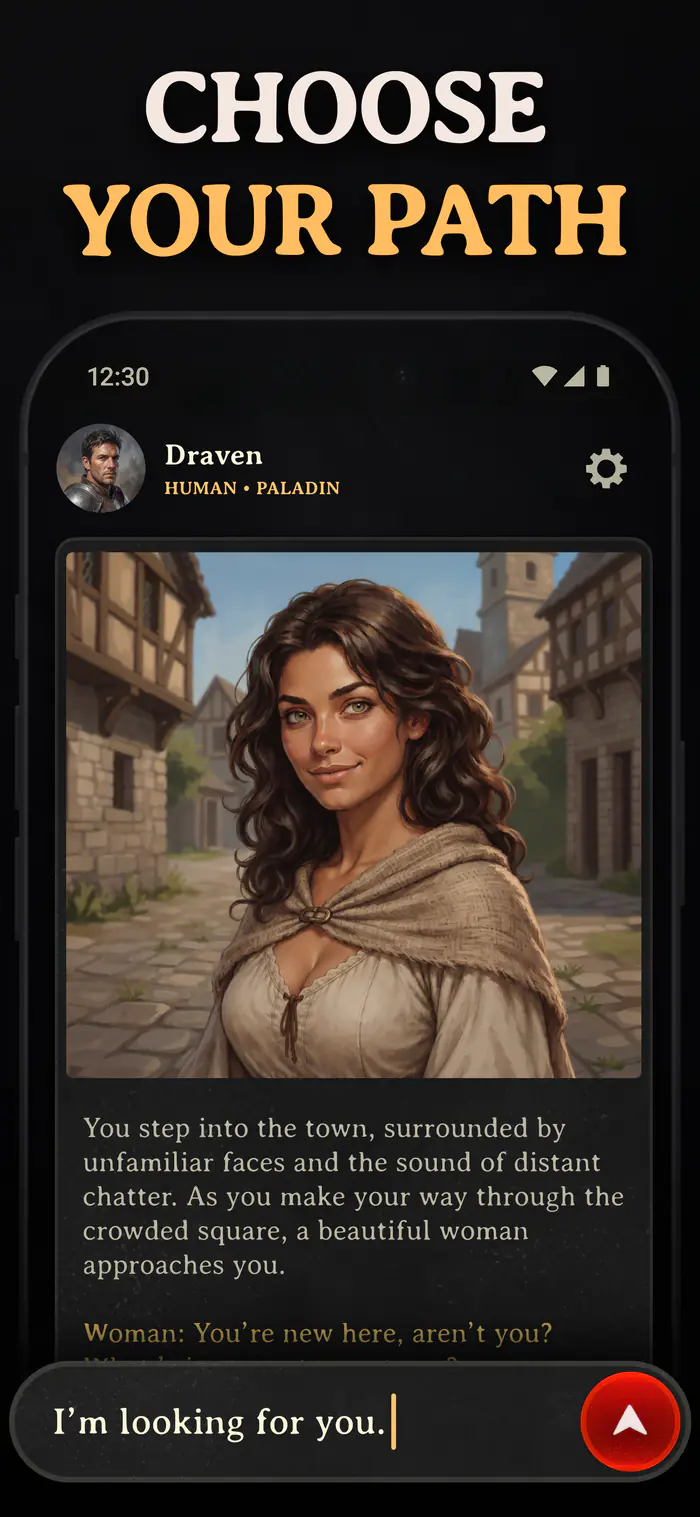
Write what your hero does in your own words, and be specific: “I show the guard the forged seal and hold his eye” gives the Dungeon Master more to work with than “I try to get in.” Talk to people. Ask questions. You do not need to know what happens next; that is the Dungeon Master's job.
In Fablia There is no branching menu: you type freely. On the nights you just want to play, suggestions sit under every scene.
-
Let the dice decide
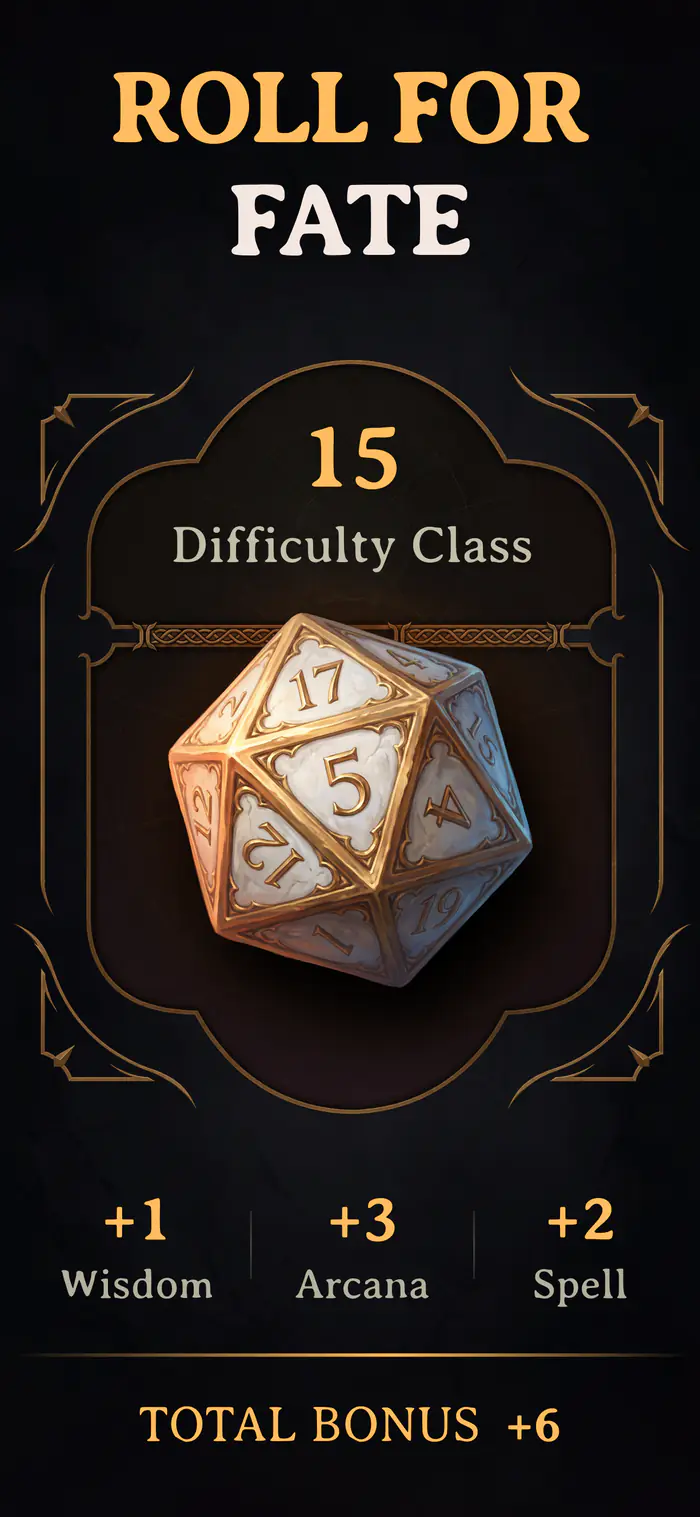
When a move is risky, the Dungeon Master calls for a check: an ability (say, Dexterity), sometimes a skill (Acrobatics), and a DC. Roll a d20, add the ability bonus and your proficiency if it applies, and compare. A natural 20 always succeeds and a natural 1 always fails. Take the result as it lands: a failed check is part of the story, not a dead end.
In Fablia Checks are rolled with a real 3D d20, with sound and haptics. The DC is set before you throw and your bonuses land on the roll one by one. Fall in battle, and a death save decides it: rise with 1 HP, or the dark takes you.
-
Keep the campaign on track
Long campaigns need a memory. Keep a list of open quests, the names of the people who matter and what they think of you. Save before big decisions. If the story contradicts something that happened earlier, say so plainly and carry on.
In Fablia The quest log tracks what you swore to do, the Codex records the people and places you meet, and the Chronicle keeps every scene of your campaign. Multiple save slots let several adventures run side by side.
Tips for a better solo session
- Say what the scene is about. “I want to find out who hired the assassins” steers better than waiting for something to happen.
- Play short. Solo play has no group to schedule. Ten minutes on the bus is a session.
- Let your hero be wrong. Bad calls, grudges and failed checks make the scenes you remember.
- Vary the pace. Follow a fight with a quiet scene at the campfire; the Dungeon Master will follow your lead.
- Listen instead of reading when your eyes are tired. In Fablia, the Dungeon Master can read any scene aloud (Listen is part of PRO).
If you use a general chatbot instead
You can run a solo game in any chat assistant. It works best with a clear setup message at the start, something like:
Be my Dungeon Master for a solo fantasy adventure. Setting: a river city ruled by a merchant council. My character: Mira, a half-elf rogue who owes money to the wrong people. Use fifth-edition-style checks: when an action is risky, tell me the ability and the DC before I roll a d20. Describe what happens, play the other characters, and never decide my character's actions for me. Keep a short summary of quests and important characters at the end of each scene.
Two things to expect. You keep the character sheet yourself (hit points, gear, spells), because a chat assistant does not track them unless you ask. And very long chats can lose early details, since an assistant only sees a limited amount of the conversation at once; the running summary helps. An app built for solo play keeps this state for you.
Questions
Do I need to know the fifth-edition rules?
No. The Dungeon Master handles the rules and tells you when to roll. If you already know them, you will feel at home.
Is Fablia an official fifth-edition product?
No. Fablia is an independent game inspired by fifth-edition rules. Race traits and class features come from the System Reference Document 5.2, published under the Creative Commons Attribution 4.0 licence. Fablia is not affiliated with, endorsed by or sponsored by Wizards of the Coast.
How long does a solo session take?
As long as you like: five minutes or five hours. Your campaign is saved, so you can stop mid-scene and pick it up later.
Can I play offline?
No. The Dungeon Master writes every turn on our servers, so Fablia needs an internet connection.
Is Fablia free?
Fablia is free to download on Google Play. Fablia PRO adds:
- Unlimited Chatting
- Forge Your Own Story
- Access All Adventures
- Advanced Storytelling Memory
- Interactive World Map
- Cinematic Scene Illustrations
- Premium Worlds & Themes
- Ad-Free Experience
Sources
- System Reference Document 5.2 (CC-BY-4.0) www.dndbeyond.com/srd